
 CS2
 Dota 2
 LoL
 VAL
 MLBB
 HoK
 R6
 OW
 CoD
 SC2
 RL
MOBA (Multiplayer Online Battle Arena) games have been at the center of esports for more than fifteen years. League of Legends and Dota 2 still run some of the biggest events in competitive gaming, and on phones Mobile Legends: Bang Bang and Honor of Kings draw audiences that rival them. This article covers where the genre came from, which games built a real esports scene and which ones faded, and how to follow the ones that are still going.
See also our articles on FPS, RTS, battle royale, fighting game and card game esports.
What is a MOBA?
In a MOBA, two teams (almost always five players each) fight to destroy the other team's main base on a fixed, roughly symmetrical map. Each player controls a single hero with its own abilities. Waves of computer-controlled units ("creeps" or "minions") march down three lanes, defensive towers guard each lane, and the jungle between the lanes holds neutral monsters that give gold and experience.
A game is a constant trade-off between farming gold to get stronger, fighting the enemy for map control, and taking objectives. That combination of individual mechanics and five-person coordination is what makes MOBAs work as a spectator sport: there's always a fight to watch, but the result usually comes down to decisions made minutes earlier. For a broader overview of the scene, see our esports guide.
Where MOBAs came from
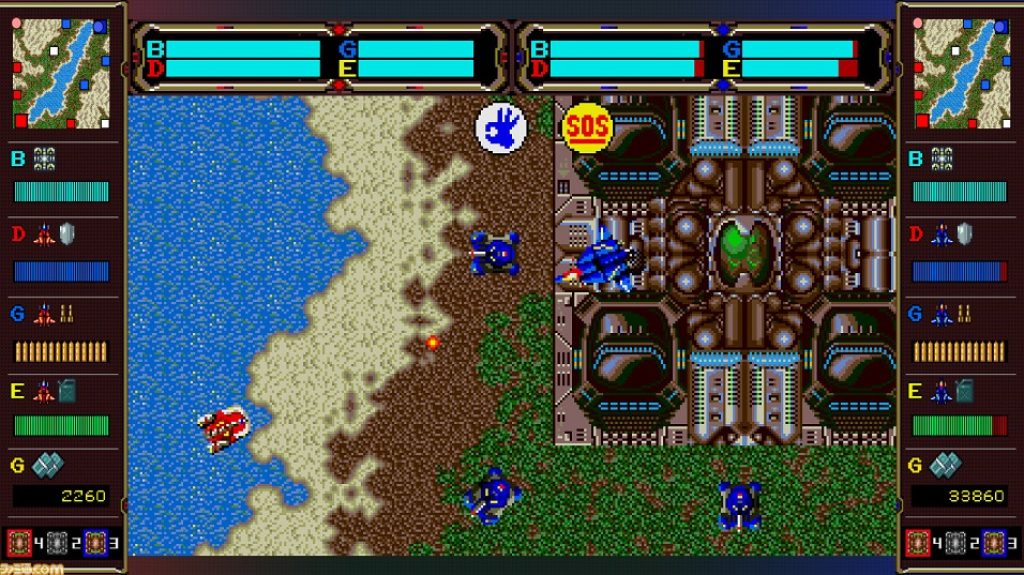
The genre grew out of real-time strategy games. The usual starting point is Herzog Zwei (Sega Mega Drive, 1989): each player controls one transforming unit that fights directly and orders troops around, an early version of the "one hero plus an army" idea.
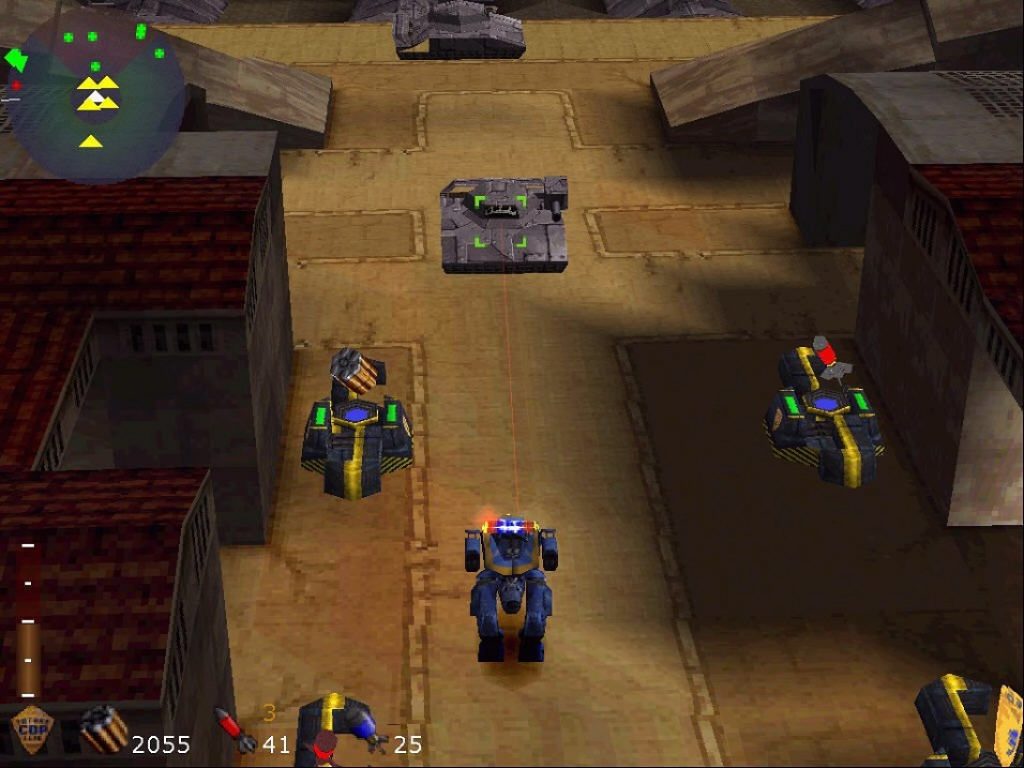
Future Cop: LAPD (1998) had a mode called Precinct Assault, in which two players push across a map using turrets and AI-controlled units. People often call it a proto-MOBA. The same year, a StarCraft custom map called Aeon of Strife settled the template: one hero per player, three lanes, and computer-controlled waves pushing towards each base.
DotA: the mod that made the genre
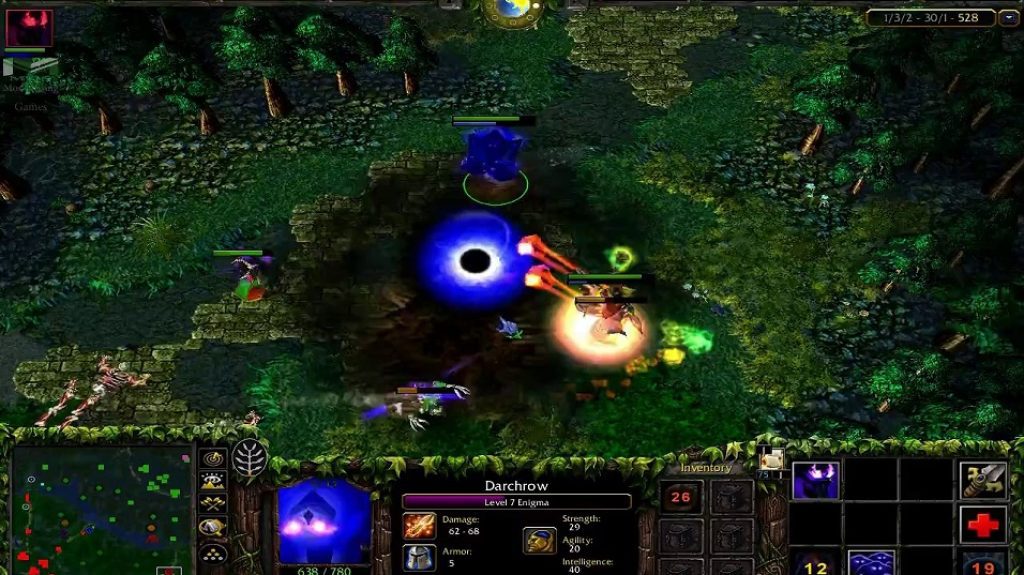
The real breakthrough was Defense of the Ancients (DotA), a Warcraft III custom map first released in 2003. Several modders worked on it over the years. The version that won out, DotA Allstars, was maintained for most of its life by the developer known as IceFrog. In the late 2000s it was one of the most-played competitive games in the world, especially in China, Southeast Asia and Eastern Europe, and it was the first MOBA with a real tournament scene.
The people behind it went on to make the two games that still dominate the genre. Riot Games hired Steve "Guinsoo" Feak, a former DotA Allstars maintainer, to help build League of Legends. Valve hired IceFrog to make Dota 2.
League of Legends
League of Legends came out on 27 October 2009. It is free to play, quicker to learn than DotA, and Riot has run its competitive scene directly since the first World Championship in 2011. The structure today is a set of regional leagues (the LCK in Korea, the LPL in China, the LEC in Europe, plus leagues in the Americas and Asia-Pacific) that feed two international events: the Mid-Season Invitational and the World Championship ("Worlds"). Most of the big regional leagues are franchised, with permanent partner teams instead of promotion and relegation.
Korea and China have dominated internationally for most of the game's history, and T1's Lee "Faker" Sang-hyeok, who won five Worlds titles between 2013 and 2024, is the most famous player the genre has produced.
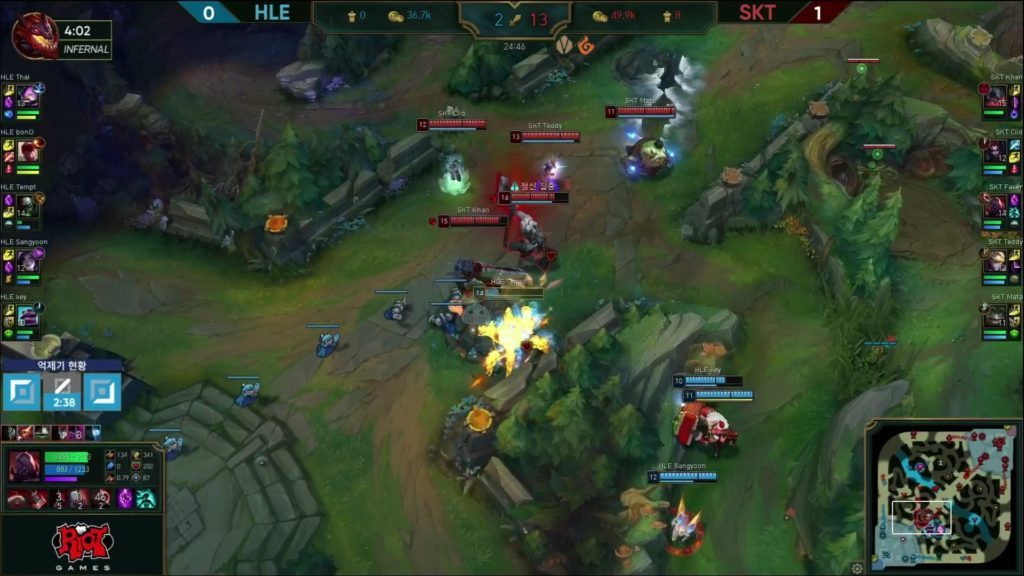
On Esportsresults: our League of Legends page lists live, upcoming and finished matches across the regional leagues and international events, with a date picker that goes back to July 2025. LoL power rankings rate teams with an Elo system built from finished matches since July 2025, and LoL transfers lists roster moves as we spot them. For deep historical records, Liquipedia is the standard reference.
Dota 2
Valve showed Dota 2 to the public at the first The International in August 2011, which had a $1.6 million prize pool, then a huge figure for esports. The full release followed on 9 July 2013. From 2013 Valve crowdfunded The International's prize pool through in-game purchases, and it grew to about $40 million in 2021, still the biggest prize pool in esports history.
That model has since ended. Valve stopped crowdfunding through the battle pass and shut down its own Dota Pro Circuit after the 2023 season, so the prize pool for The International is now a small fraction of its peak. The year is now built around third-party tournaments run by organizers such as ESL, PGL and BLAST. That made the calendar more fragmented, but the game is still among the most competitive in esports. Dota 2 is also known for having no fixed favorites: teams from Europe, Southeast Asia, China and the CIS have all won The International.
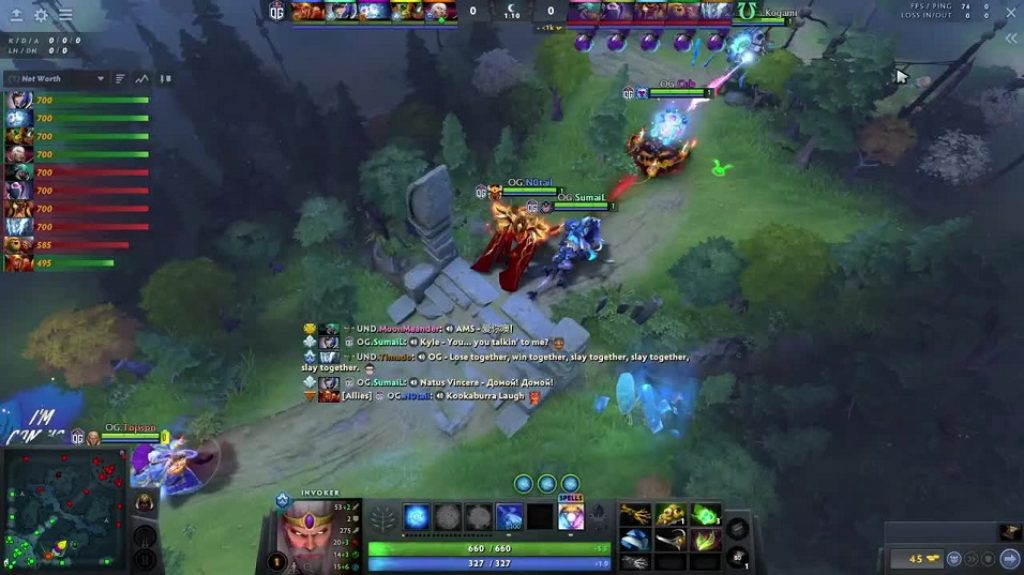
On Esportsresults: the Dota 2 page covers the whole third-party circuit in one feed. For many professional Dota 2 matches the match pages also show in-game stats from the game servers, such as kills over time and per-player breakdowns. Dota 2 power rankings are especially useful in this game, because with no official circuit there's no single standings table to tell you who's in form. For roster moves, see Dota 2 transfers.
The mobile MOBAs
The biggest MOBA growth of the last decade has been on phones, mostly in Asia. Matches are shorter (often 15–20 minutes), the controls are built for touchscreens, and the audiences are large.
Honor of Kings
Tencent's Honor of Kings (developed by TiMi Studio, released in China in 2015 and also known as King of Glory) is one of the most-played games in the world. Its top league in China, the King Pro League (KPL), is among the biggest esports leagues of any genre. For years the game was released abroad as a separate, reworked version, Arena of Valor, which built small scenes in Taiwan, Vietnam and Thailand. Honor of Kings itself launched globally in 2024 and has since been added to international events.
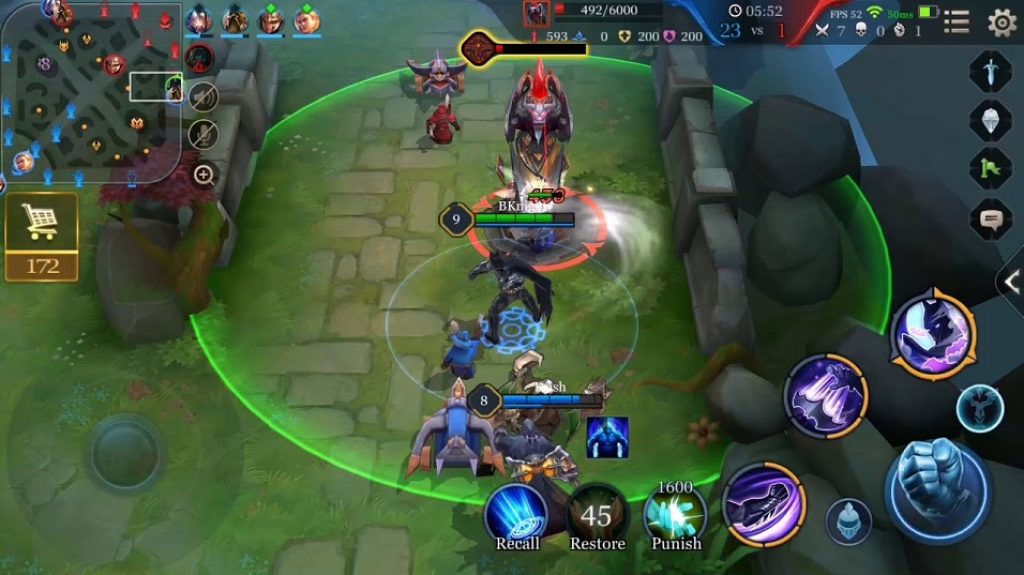
Follow it on our Honor of Kings page, with power rankings and transfers.
Mobile Legends: Bang Bang
Moonton's Mobile Legends: Bang Bang (2016) is the biggest MOBA in Southeast Asia. Indonesia and the Philippines have huge, passionate scenes, and the regional MPL leagues and the annual M-series World Championship (first held in 2019) regularly draw some of the largest live audiences in esports. Filipino teams have dominated the international events for most of the series' history.
Follow it on our Mobile Legends page, with power rankings and transfers.
League of Legends: Wild Rift
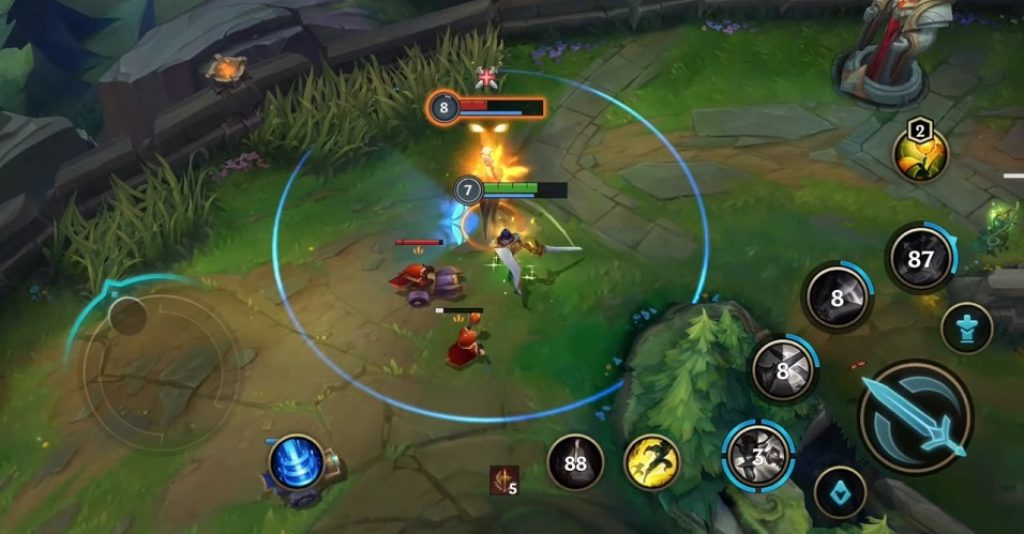
Riot's mobile adaptation of League came out in 2020 and runs on a simplified version of the same champions and map. It has a competitive scene, most strongly in China, but it has never come close to the size of MLBB or Honor of Kings, and Riot has scaled back its international Wild Rift esports plans since launch.
The MOBAs that faded
Many studios tried to compete with League and Dota. Most did for a few years, then stopped. Their history shows how hard it is to keep a MOBA esports scene going without a huge player base behind it.
Heroes of the Storm
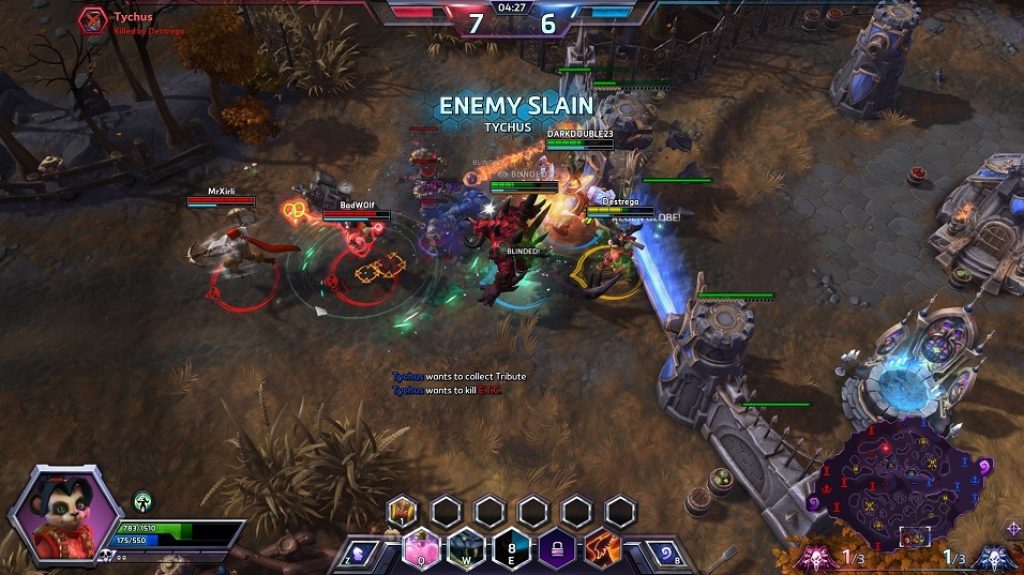
Blizzard's MOBA started life as a Dota-style map for StarCraft II's custom-game system. It became a standalone game and launched in June 2015, with shorter matches, shared team experience and objectives that differ from map to map. Blizzard ran a professional league, the Heroes Global Championship, but canceled it at the end of 2018, and the game has since gone into maintenance mode with only occasional updates. Community tournaments still happen, but the professional scene is gone.
Smite
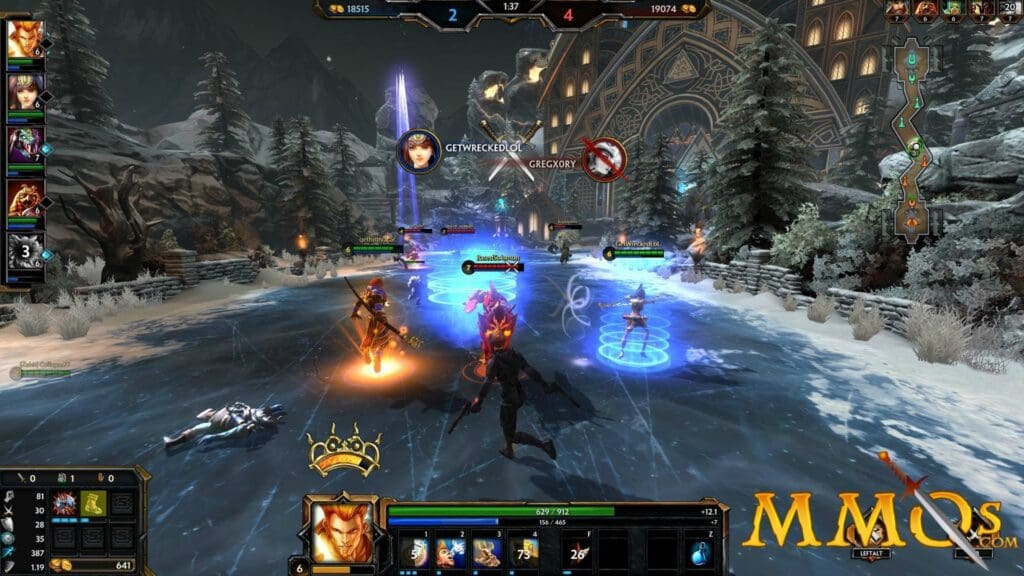
Hi-Rez Studios' Smite (full release 2014) used a third-person, over-the-shoulder camera and a cast of mythological gods, so you aim your abilities instead of clicking on targets. For about a decade it had a stable professional scene with an annual World Championship. Hi-Rez has since moved its focus to a successor built on a new engine, Smite 2, and the competitive scene is in transition along with it.
Vainglory
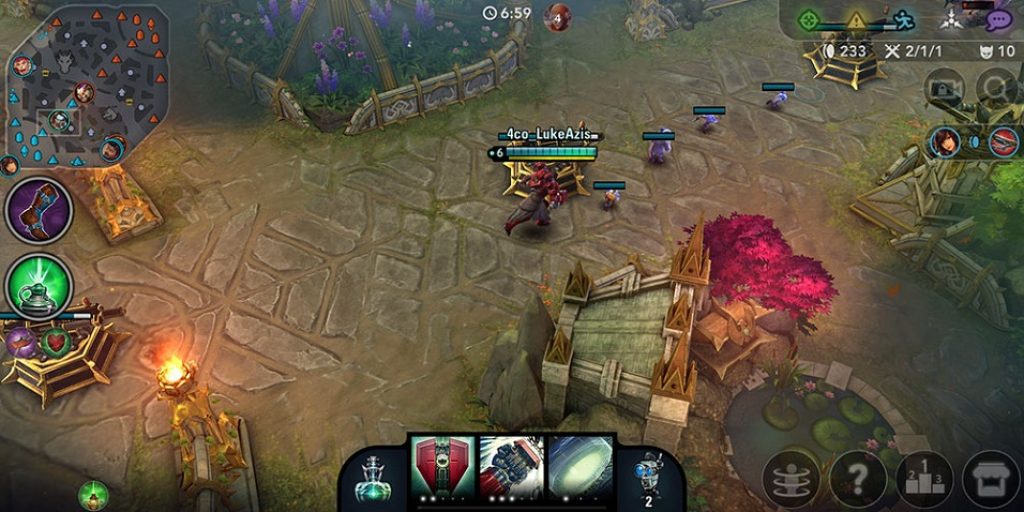
Super Evil Megacorp's Vainglory (2014) was one of the first serious MOBAs on touchscreens. Apple used it to show off iPhone hardware, and it had a well-funded esports circuit in its early years. It was overtaken by the mobile games from Tencent and Moonton, its developer stopped working on it in 2020, and its professional scene had ended by then.
Why a few games win
MOBAs are a winner-takes-most genre. A new player faces a hundred or more heroes, years of established strategy and long matches. Once someone has put hundreds of hours into one MOBA, they rarely switch to another. Professional scenes follow the players: sponsors, organizations and broadcasters back the games with the biggest audiences, which keeps those audiences big. That explains why the games that matter in 2026 are still the ones that were established a decade ago. On PC they're League of Legends and Dota 2. On mobile they're Honor of Kings and Mobile Legends.
The changes to watch are structural, not new games. One is how Dota 2 copes without Valve's own circuit. Another is how Riot's league structure develops. A third is how far the mobile MOBAs spread beyond Asia. You can follow all four games' results, rankings and roster moves on the pages linked above.